
Endometriosis is not “just a bad period.” It is a chronic, inflammatory condition that can significantly affect physical health, emotional wellbeing and daily life.
It occurs when tissue similar to the lining of the womb (endometrium) grows outside the uterus. This tissue can attach to the ovaries, fallopian tubes and the lining of the abdomen, and sometimes other areas of the body. Because it responds to hormonal changes during the menstrual cycle, it can cause inflammation, pain and scarring.
Endometriosis affects an estimated 1 in 10 people assigned female at birth. However, it is often misunderstood and underdiagnosed, with diagnosis frequently delayed by seven to ten years.
It can affect women and people assigned female at birth throughout their reproductive years. It is less likely in the early years after a first period and less common after menopause.
While some women are able to manage their symptoms, others experience a significant impact on work, relationships, fertility and mental health. Although there is no cure, treatments are available to help manage symptoms and improve quality of life.
Symptoms
Symptoms of endometriosis can vary significantly from person to person. Some experience severe daily pain, while others have milder or intermittent symptoms. Common symptoms include:
- Painful periods that interfere with daily life
- Heavy menstrual bleeding
- Pelvic pain outside of periods
- Pain during or after sex
- Pain when going to the toilet during a period
- Difficulty getting pregnant
- Fatigue
- Bloating (sometimes called “endo belly”)

Because symptoms can overlap with other conditions, endometriosis is sometimes dismissed as “bad period pain.” If symptoms are persistent, severe, or worsening, they should not be ignored.
Causes
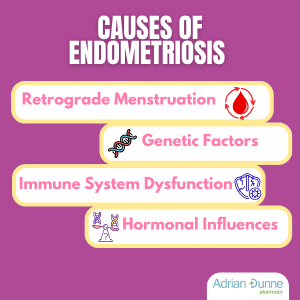
The exact cause of endometriosis is still unknown. Several theories have been suggested, including:
- Retrograde menstruation – menstrual blood flowing backwards through the fallopian tubes into the pelvis
- Genetic factors – it can run in families
- Immune system dysfunction
- Hormonal influences
Research is ongoing, but what is clear is that endometriosis is a complex medical condition, not a normal part of menstruation.
Treatment
There is no cure for endometriosis, but symptoms can be managed with the right support. Treatment plans are individual and may include:
- Pain relief medications
- Hormonal treatments to manage symptoms
- Surgical intervention in some cases
- Physiotherapy and pelvic health support
- Lifestyle and dietary adjustments

Living with Endometriosis
Living with endometriosis can be physically and emotionally challenging. Chronic pain, fatigue, and uncertainty can affect work, relationships, and mental health. Ongoing support, understanding, and validation are essential.
If period pain or pelvic symptoms are affecting your daily life, support is available. Speak to your pharmacist or GP, your pain deserves to be taken seriously.
To find your local Adrian Dunne Pharmacy see our store locator here.